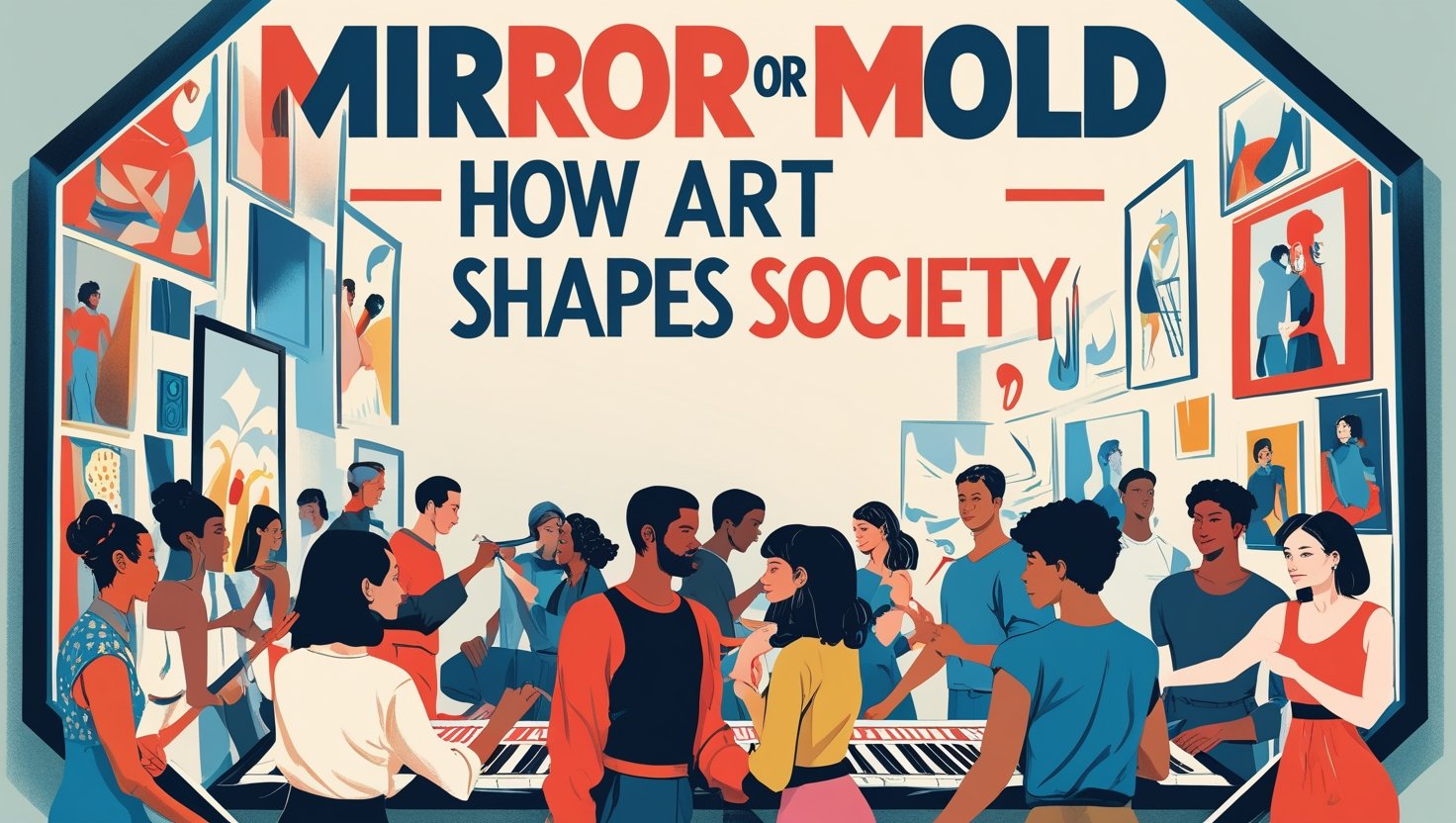
Mirror or Mold? How Art Shapes Society
Does art merely reflect the society it emerges from, or does it actively shape society itself? This age-old question sits at the heart of cultural theory, challenging our understanding of creativity’s true power and revealing whether artists are passive observers or active architects of social change.
The Great Debate: Reflection vs. Creation:
The mirror vs. mold theory represents one of the most compelling discussions in cultural studies, examining whether art shapes society or simply reflects existing social conditions. This philosophical divide has profound implications for how we understand artistic responsibility, cultural evolution, and the power dynamics between creators and consumers.
Mirror theorists argue that art functions as a cultural reflection, capturing and documenting the prevailing attitudes, values, and social structures of its time. From this perspective, artists act as sensitive observers who translate societal conditions into visual, auditory, or literary forms. Renaissance paintings depicting religious themes reflected the dominance of Christian culture, while 1960s protest music mirrored the era’s social unrest and political upheaval.
Mold theorists contend that art actively shapes society by introducing new ideas, challenging existing norms, and influencing public opinion. This perspective positions artists as cultural architects who construct new realities through their creative work. Picasso’s cubism didn’t just reflect changing perceptions of reality, it fundamentally altered how people conceptualized space, form, and representation.
The complexity of this relationship becomes apparent when examining contemporary digital art and social media aesthetics. These forms simultaneously reflect current technological capabilities while actively shaping how society communicates, presents itself, and understands beauty standards.
- Historical Evidence: Art as Social Mirror:
Throughout history, art has reflected society in remarkably consistent patterns, serving as a cultural barometer that reveals the dominant ideologies, economic conditions, and social hierarchies of different eras. Medieval illuminated manuscripts reflected the religious devotion and hierarchical structure of feudal society, while Dutch Golden Age paintings captured the prosperity and domestic values of emerging merchant classes.
Art historical analysis reveals several key ways that creative works mirror their social contexts:
- Economic indicators: Lavish court paintings during periods of wealth, austere forms during economic hardship
- Political climates: Propaganda art during wartime, subversive works during periods of oppression
- Social values: Changing representations of gender, family, and work reflecting evolving cultural norms
- Technological capabilities: New artistic techniques emerging alongside technological innovations
Sociological evidence supports the mirror theory through extensive documentation of how artistic movements correlate with broader social changes. Impressionism emerged during the Industrial Revolution, reflecting changing relationships with nature and urban life. Abstract expressionism coincided with post-war American confidence and individualism.
Archaeological discoveries continuously reveal how ancient art forms documented social structures, religious beliefs, and daily life practices. Cave paintings from Lascaux provide insights into prehistoric hunting cultures, while Egyptian tomb art reflects complex beliefs about death and the afterlife.
The documentary function of art becomes particularly evident in photojournalism and social realism, where artists explicitly aim to capture and preserve social conditions for future generations.
Historical Evidence: Art as Social Architect:
Compelling evidence demonstrates that art shapes society through its capacity to introduce revolutionary concepts, challenge established norms, and inspire social movements. Renaissance humanism wasn’t just reflected in art, it was actively promoted and spread through artistic works that celebrated individual achievement and classical learning.
Transformative artistic movements have consistently preceded and catalyzed social change:
- Dadaism challenged traditional artistic conventions while promoting anti-war sentiment
- The Harlem Renaissance elevated African American culture and contributed to civil rights awareness
- The feminist art movement actively challenged gender stereotypes and promoted women’s rights
- Street art continues to influence urban culture and political discourse
Propaganda research reveals art’s powerful ability to shape public opinion and behavior. Soviet socialist realism actively promoted communist ideologies, while Nazi propaganda art demonstrated art’s capacity to manipulate social attitudes. These examples, though extreme, illustrate art’s undeniable power to mold social consciousness.
Contemporary evidence includes how film and television have influenced social attitudes toward minorities, shaped fashion trends, and normalized previously taboo subjects. Popular music has consistently introduced new cultural perspectives, from jazz challenging racial segregation to hip-hop giving voice to urban experiences.
Digital art and social media aesthetics actively shape contemporary beauty standards, communication styles, and cultural values. Instagram culture didn’t just reflect existing social media habits, it created new forms of self-presentation and social interaction.
The Psychological Impact of Artistic Expression:
Psychological research reveals that art shapes society through its profound impact on individual and collective consciousness. Cognitive psychology demonstrates that artistic experiences alter brain structure, influence memory formation, and shape perception patterns that extend far beyond aesthetic encounters.
Neuroplasticity studies show that regular exposure to art physically changes brain structure, enhancing creativity, empathy, and cognitive flexibility. These changes influence how individuals interact with their social environment, creating ripple effects that gradually transform social consciousness.
Emotional regulation through artistic expression provides mechanisms for processing collective trauma, celebrating shared achievements, and building social cohesion. Memorial art helps societies process grief and loss, while celebratory art reinforces cultural values and shared identity.
Identity formation occurs through artistic engagement, as individuals use creative works to understand themselves and their place in society. Coming-of-age narratives in literature and film provide templates for personal development, while cultural art forms help individuals connect with their heritage and community.
Social psychology research demonstrates that shared artistic experiences create stronger social bonds, increase empathy, and promote cooperation. Concert attendance, museum visits, and theatrical performances build social capital and reinforce community connections.
Economic Forces: The Art Market’s Influence:
Economic factors significantly impact whether art shapes society or merely reflects existing power structures. Art market dynamics determine which voices gain prominence, which messages receive widespread distribution, and which cultural narratives become dominant.
Patronage systems throughout history have shaped artistic content and social influence. Renaissance patrons commissioned works that promoted specific political and religious agendas, while contemporary collectors and corporate sponsors continue to influence artistic production and accessibility.
Commercial art industries actively shape social trends through advertising, entertainment, and fashion. These industries don’t just respond to consumer preferences, they actively create desires, establish trends, and influence social behavior patterns.
Digital economics have democratized art creation and distribution, enabling previously marginalized voices to reach global audiences. Social media platforms and streaming services have disrupted traditional gatekeeping mechanisms, allowing diverse perspectives to influence social discourse.
Economic inequality in art access creates disparities in cultural influence. Elite art institutions may perpetuate existing social hierarchies, while community art programs can promote social mobility and cultural democracy.
Cultural Evolution Through Artistic Innovation:
Cultural anthropology reveals that art shapes society through its role in cultural evolution. Artistic innovations often precede and enable broader social transformations by providing new symbolic languages, conceptual frameworks, and expressive possibilities.
Technological art forms have consistently driven cultural change:
- Photography transformed how society documented and remembered events
- Cinema created new forms of storytelling and shared cultural experiences
- Digital media has revolutionized communication and social interaction
- Virtual reality is beginning to reshape how we experience and understand reality
Cross-cultural exchange through artistic collaboration creates hybrid forms that challenge traditional boundaries and promote cultural understanding. World music fusion genres have created new cultural identities that transcend national boundaries.
Generational change occurs through artistic innovation, as new art forms appeal to younger audiences and gradually replace older cultural expressions. Hip-hop culture exemplifies how artistic movements can completely transform social landscapes within a generation.
Linguistic evolution is influenced by artistic expression, as poetry, song lyrics, and performance art introduce new vocabulary, communication styles, and expressive possibilities that gradually enter mainstream language.
The Digital Age: New Paradigms of Influence:
Digital technology has fundamentally altered the relationship between art and society, creating new possibilities for both reflection and transformation. Social media platforms serve as both mirrors reflecting current social conditions and molds actively shaping future cultural directions.
User-generated content has democratized artistic creation, enabling millions of individuals to participate in cultural production and influence social discourse. Viral content can rapidly spread new ideas, challenge established norms, and create global cultural movements.
Artificial intelligence in art creation raises new questions about authorship, creativity, and cultural influence. AI-generated art reflects existing cultural biases while potentially creating new aesthetic possibilities that could reshape artistic expression.
Virtual and augmented reality technologies are creating immersive artistic experiences that could fundamentally alter how society perceives and interacts with art. These technologies blur the boundaries between artistic representation and social reality.
Blockchain technology and NFTs are creating new economic models for art distribution and ownership, potentially reshaping how artistic value is created and cultural influence is distributed.
Global Perspectives: Cultural Diversity in Artistic Impact:
Cross-cultural analysis reveals that the relationship between art and society varies significantly across different cultural contexts. Western individualistic cultures may emphasize art’s role in personal expression and social critique, while collectivistic cultures may prioritize art’s function in maintaining social harmony and cultural continuity.
Indigenous art traditions often serve as both cultural mirrors and social molds, preserving traditional knowledge while adapting to contemporary challenges. Aboriginal Australian art maintains spiritual and cultural connections while engaging with modern art markets and global audiences.
Post-colonial perspectives examine how art shapes society in contexts of cultural recovery and identity reconstruction. African contemporary art reflects colonial experiences while actively reshaping cultural narratives and promoting African perspectives on global stages.
Globalization has created new forms of cultural hybridization where local art forms interact with global influences, creating unique expressions that both reflect and shape evolving cultural identities.
Cultural diplomacy through artistic exchange demonstrates art’s power to build international understanding and influence global perspectives on specific societies and cultures.
Future Implications: Art’s Evolving Role:
Emerging technologies and changing social structures are creating new possibilities for how art shapes society. Climate change is inspiring new forms of environmental art that both reflect ecological concerns and actively promote sustainable behaviors.
Demographic changes are influencing artistic production and reception, as diverse populations create new cultural expressions that challenge traditional artistic hierarchies and social structures.
Educational integration of arts programs could enhance the arts’ capacity to shape society by developing creative thinking skills and cultural awareness in broader populations.
Policy implications of understanding art’s social influence include decisions about arts funding, cultural education, and creative industry development that could significantly impact future social development.
Predictive modeling suggests that art and society will become increasingly interactive, with real-time feedback mechanisms allowing artistic works to respond dynamically to social conditions while simultaneously influencing cultural evolution.
Conclusion:
The mirror or mold debate reveals that art shapes society through a complex, bidirectional relationship that defies simple categorization. Rather than choosing between reflection and creation, we must recognize that art simultaneously mirrors existing conditions while actively molding future possibilities, making it one of humanity’s most powerful forces for both cultural preservation and social transformation.
FAQs:
Q1: Does art primarily reflect society or shape it?
Art both reflects and shapes society simultaneously through a complex, bidirectional relationship.
Q2: Can art actually change people’s minds and behaviors?
Yes, psychological research confirms that art influences cognition, emotions, and social attitudes.
Q3: How has digital technology changed art’s influence on society?
Digital platforms have democratized art creation and accelerated cultural influence through viral distribution.
Q4: Do all cultures view art’s social role the same way?
No, different cultures emphasize various aspects of art’s relationship with society based on their values.
Q5: What evidence supports art’s power to shape society?
Historical social movements, propaganda effectiveness, and psychological studies all demonstrate art’s transformative power.
Q6: How will art’s influence on society evolve in the future?
Emerging technologies will likely create more interactive and immediate relationships between artistic expression and social change.